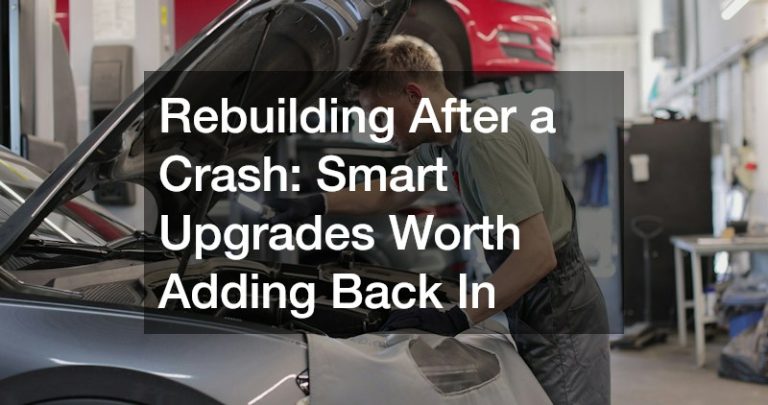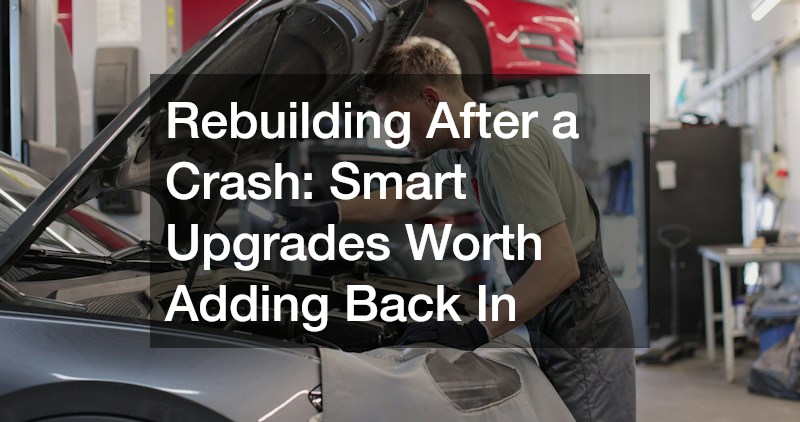

A crash can total more than just sheet metal — it can leave you staring at an insurance check wondering what to prioritize as your car goes back together. The good news is that a repair is also a rare opportunity to make your vehicle safer, more efficient, and better equipped than it was before the accident. Instead of simply restoring things to factory spec, many owners use this moment to add upgrades that improve daily driving and long-term value. Here’s how to think through those decisions so you walk away with a smarter, stronger vehicle.
Upgrading Safety Sensors and Driver Assistance Features
If your car predates modern driver assistance technology, a post-crash rebuild is a logical time to consider adding it. Features like forward collision warning, blind spot monitoring, and lane departure alerts have become more affordable to retrofit, and many shops can integrate them during bumper or fender replacement. Since these components often sit in areas already being repaired, labor costs are frequently lower than installing them from scratch later.
It’s worth asking your shop which sensors are compatible with your make and model before parts are ordered. Some systems require recalibration after any front-end work anyway, so bundling in an upgrade avoids paying for that labor twice. Think of this as closing the gap between your car’s original capabilities and what’s now standard on newer models.
- Forward collision warning with automatic braking
- Blind spot and rear cross-traffic alerts
- Adaptive headlights that follow steering input
- Rearview and surround-view camera upgrades
Choosing Better Materials for Bumpers and Panels

When a bumper cover, fender, or quarter panel needs replacing, you often have a choice between OEM parts, aftermarket parts, or slightly upgraded materials that offer better durability. Reinforced polymer bumpers and higher-grade steel panels can offer improved impact absorption without significantly increasing weight. This is also a good time to discuss rust-resistant coatings, especially if you live somewhere with road salt or high humidity.
Ask your technician to walk you through the trade-offs between cost, weight, and long-term durability for each part being replaced. In many cases, paying a little more upfront for better-grade materials saves money on future repairs. A thorough collision repair process should include this kind of conversation, since the parts chosen now will affect how your car performs and holds up in the next decade of driving.
Updating Lighting Systems for Visibility and Style
Headlight and taillight assemblies are commonly damaged in collisions, which makes this an easy upgrade to fold into the repair process. Upgrading from halogen to LED or HID lighting can dramatically improve nighttime visibility, and many replacement assemblies are now built with LED technology as standard. Better lighting isn’t just a style choice — it directly affects how early you spot hazards and how quickly other drivers notice you.
- LED headlight assemblies for sharper, whiter light
- Sequential or upgraded LED taillights for visibility
- Fog lights if your original trim didn’t include them
- Auto-leveling headlights for better illumination on hills
Reinforcing Structural and Suspension Components
Frame damage and suspension misalignment are two of the most overlooked consequences of a crash, even in accidents that look minor from the outside. When a shop is already replacing control arms, struts, or mounts, it’s often worth asking about upgraded components rated for more durability or performance than the factory originals. This won’t turn your car into a race machine, but stronger bushings or reinforced mounts can reduce wear and improve ride quality for years afterward.
Make sure any structural work includes a full alignment check once repairs are complete, since even small misalignments can cause uneven tire wear down the road. If your vehicle has any aftermarket suspension modifications from before the accident, confirm with your shop that replacement parts match the specs needed for your setup. Getting this right now prevents handling issues that are much harder to diagnose later.
- Reinforced control arms and sway bar links
- Upgraded shock absorbers or struts
- Polyurethane bushings for durability
- Full four-wheel alignment after suspension work
Adding Modern Infotainment and Connectivity Features
If your dashboard or center console sustained damage, you have an opening to modernize features that may have felt outdated before the crash. Since the dash often has to come apart anyway during repairs, this is the cheapest it will ever be to upgrade what’s underneath. Touchscreen infotainment systems with Apple CarPlay and Android Auto integration, upgraded speakers, and additional USB-C charging ports are common additions during dash repairs. Prices vary widely depending on what you’re after. A basic double-DIN touchscreen unit with smartphone mirroring can run $150 to $400, while premium systems with navigation, backup camera integration, and amplified sound start closer to $600 and climb from there. If you’re already paying labor to pull the dash apart, adding a couple hundred dollars in parts costs far less than doing the same upgrade as a standalone project later. It’s worth asking your shop about compatibility before committing to anything. Some factory systems are tied into the car’s CAN bus network, controlling things like climate readouts or steering wheel controls, so swapping in an aftermarket unit may require an adapter harness or loss of certain functions. Confirming this upfront avoids paying for a feature that doesn’t actually work with your car. These upgrades won’t affect safety directly, but they do make the car more enjoyable and functional for daily use. Small additions like a wireless charging pad, extra USB-C ports for rear passengers, or a higher-wattage amp for the factory speakers add everyday convenience without requiring a full electronics overhaul.
- Touchscreen units with Apple CarPlay or Android Auto, typically ranging from 7-inch to 12-inch displays depending on dash space and budget
- Upgraded speaker systems for clearer audio, from simple door speaker swaps to full amp-and-subwoofer setups
- Additional charging ports for passengers, including USB-C fast charging and wireless charging pads up front
- Dash cameras integrated into the windshield area, with dual-channel options that also record the rear window
- Backup cameras or 360-degree camera systems, especially useful if the collision affected rear visibility or bumper sensors
- Bluetooth and Wi-Fi hotspot capability for hands-free calls, streaming, and keeping multiple devices connected on long drives
Rebuilding after a crash is never a situation you want to be in, but it does give you a chance to make deliberate choices rather than settling for exactly what existed before. Talk with your repair shop early about which upgrades make sense for your budget, your driving habits, and the parts already being replaced. A little extra planning now can leave you with a car that’s not just repaired, but genuinely improved.
About the Author